Protecting the forests that protect our water
By Nancy Ritger
GMCG Executive Director
When we think about the White Mountain National Forest, we often think about mountains, forests, wildlife, and recreation. But these forests also perform another essential job: they help protect our water.
Rain and snowmelt flowing through forested headwaters recharge groundwater, feed streams and rivers, stabilize soils, and help filter water before it reaches downstream communities.
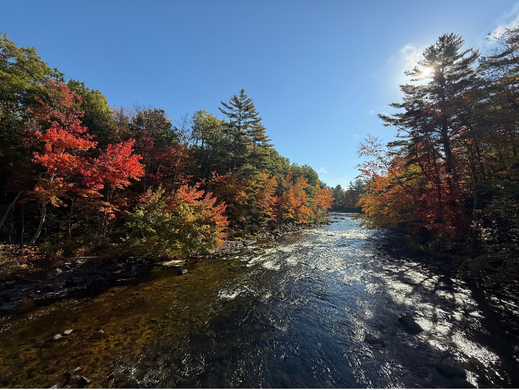
The Ossipee River flows downstream toward Maine, carrying water from the White Mountains through Ossipee Lake and onward to the Saco River. October 1, 2026.
This connection is especially important in the Ossipee region, home to New Hampshire’s largest stratified-drift aquifer. This vital drinking-water resource is highly productive—but its sandy and gravelly deposits also make it vulnerable to contamination from activities at the land surface.
What happens upstream can affect our water downstream.
That is why Green Mountain Conservation Group is urging the U.S. Department of Agriculture and U.S. Forest Service to maintain strong protections for roadless areas in the White Mountain National Forest.
Road construction can disturb soils, alter natural drainage, increase erosion, and carry sediment and pollutants into streams and groundwater. By keeping forests intact, we preserve natural systems that absorb rainfall, slow runoff, reduce erosion, and help communities prepare for both intense storms and drought.
Protecting roadless areas is about more than protecting remote forests. It is about protecting the natural infrastructure that protects our drinking water.
Water does not stop at the boundary of the White Mountain National Forest. It flows downstream into our aquifers, rivers, communities, and ecosystems.
Healthy forests protect healthy watersheds—and healthy watersheds protect our water.