A summer among pollinators protecting our watershed
by Rose Harnett
AmeriCorps Member
Education and Outreach Assistant
Pollinators are essential to the watershed. Beetles, bees, bats, butterflies, flies, wasps, moths, mosquitoes and reptiles can all serve as pollinators. As they travel from flower to flower looking for food, pollen collects on their usually hairy bodies and is carried to other plants.
Between 75% and 95% of flowering plants need help with pollination. Without pollinators, these plants would not be able to produce food, fruit and seeds or reproduce. Pollinators help our native plants grow and thrive.
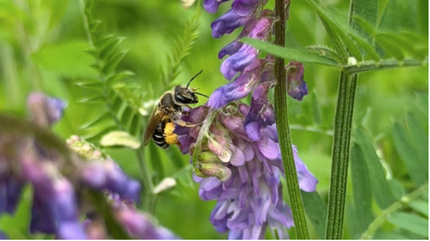
A leaf cutter bee on tufted vetch in the pollinator garden, with pollen attached to its body.
Pollinators depend on native plants for habitat, which provide food, nesting and overwintering for them. In addition to providing wildlife habitat, native plants also absorb water, filter pollutants and stabilize soil to prevent erosion. They act as a barrier, slowing water and sediment before they enter lakes, rivers and streams. When we improve and create habitat for pollinators by planting native plants, we protect water quality and the health of the watershed.
Last year, GMCG began a three-year project to establish a 6,650-square-foot pollinator field. With the first stage completed, we can now see the wildflowers planted last year growing and blooming. This summer, I monitored our new pollinator field and GMCG’s pollinator garden with the help of Sophia Payne, one of GMCG’s summer interns, and citizen science volunteers. Since many pollinator populations are declining, monitoring is important for understanding native pollinators and any changes to their populations over time. Our goal this summer was to understand the diversity of pollinators visiting our habitats and which plants they preferred.
We created pollinator monitoring data sheets and iNaturalist to collect and upload our data and identify pollinators. You can participate in our pollinator monitoring citizen science project, too. Pollinator monitoring kits are available at GMCG, or you can download and use the iNaturalist app from anywhere at any time. On iNaturalist, you can join the Pollinator Interactions on Plants (PIP) of the Northeast U.S. project and upload pictures of the pollinators you observe.
Overall, we observed more than 400 pollinators, including hummingbird moths, two-spotted bumblebees, bicolored sweat bees, swamp milkweed leaf beetles, great black digger wasps and many flies. With more than 40 plant options, the most frequently visited plants were mountain mint in the pollinator garden, cornflower in the pollinator field and butterfly weed in both areas. Each plant had its own distinct characteristics, including different colors, shapes and bloom times. A variety of flowers is important for ensuring that every pollinator finds the specific nutrients it needs.
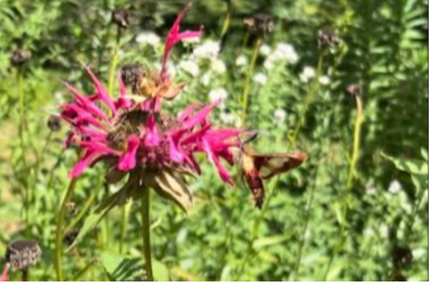
A hummingbird moth looking through bee balm for nectar in the pollinator garden. In the background, there is mountain mint and our bee houses, now filled with dead plant shoots for overwintering.
With the second stage of the pollinator field expansion planned for this fall, I am curious to see whether there will be new plant favorites and more pollinator visits next year. Through monitoring, you can see how pollinator trends change over time and how well your conservation efforts are working.
Want to help expand our pollinator field and learn how to make your property more supportive of native pollinators? Join GMCG and pollinator experts Wendy Scribner, Natural Resources Field Specialist with UNH Cooperative Extension, and Debra Marnich, Stewardship Director of the Chocorua Lake Conservancy, on Thursday, Oct. 22, for “Creating Habitat for Native Pollinators” from 10 a.m. to noon, followed by a Pollinator Habitat Improvement Project volunteer workday from noon to 2 p.m. at Green Mountain Conservation Group’s Blue Heron House, located at 236 Huntress Bridge Road in Effingham. Please register at gmcg.org. Free, donations welcome!