Cultivating a sense of wonder in the next generation of watershed stewards
By Tara Schroeder
GMCG Education Coordinator
“I sincerely believe that for the child, and for the parent seeking to guide him, it is not half so important to know as to feel. If facts are the seeds that later produce knowledge and wisdom, then the emotions and the impressions of the senses are the fertile soil in which the seeds must grow. The years of early childhood are the time to prepare the soil.” Rachel L. Carson, The Sense of Wonder: A Celebration of Nature for Parents.
I love my job – to me, it is meaningful work, I am learning new things all the time, and I get to work with kids and families and some of the most passionate and giving members of our watershed community. Most of all, I love seeing that spark of inspiration, that “sense of wonder” as Rachel Carson so aptly describes in her book of the same title, in children and adults when they discover something new in nature, solve a problem, conduct an experiment successfully or are inspired to take action to protect the environment.
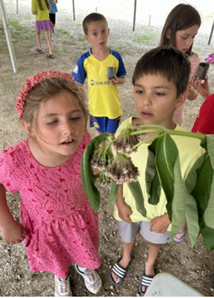
Madison Recreation Department campers find a tiny monarch caterpillar hidden amongst the milkweed flowers during one of their STEAM programs this summer.
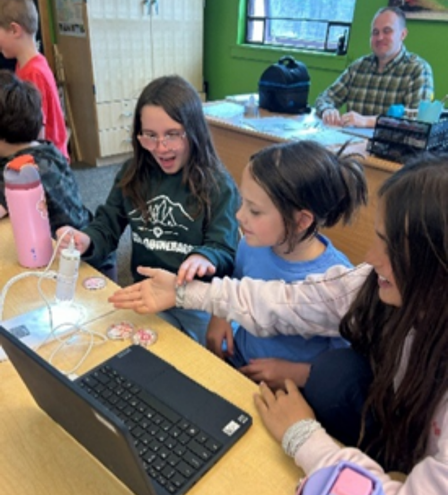
Over the course of the year there are many such moments when teaching participatory science programs for schools, summer camps, children’s centers, libraries and at our conservation center. For example, when a child discovers a new macroinvertebrate that they didn’t know existed in a river like the hellgrammite or “toe-biter”, see their first hummingbird moth in the pollinator garden, or spy a teeny, tiny monarch caterpillar on a milkweed plant, so small it was hidden under the flowers. Or, when they make elephant toothpaste, explode a pop rocket, build a boat, test their drinking water using chemistry sets and get real results, create an upcycled and reusable plastic bag, or write a letter to fix their school’s water quality. It certainly is remarkable to witness these moments when the excitement and learning is palpable, and to see the ripple effects these moments have within the watershed community. Many years later, some students who participated in GMCG’s programs have shared that they were inspired to become a town official or pursue environmental science in college as a result of their experiences.
The volunteers, teachers, teachers’ aids, school administrators, parents, grandparents, chaperones, librarians, members of the public and even the bus drivers all make these programs possible, and are ally privy to the fun and memorable experiences of learning about our surroundings through hands-on STEAM (Science Technology Engineering Art Math) programs and participatory science programs.
Right: Madison Recreation Department campers find a tiny monarch caterpillar hidden amongst the milkweed flowers during one of their STEAM programs this summer.
Whether sampling a river for microplastics and looking at them under a microscope, building a bee house to take home, counting amphibians on a Big Night, or raising trout in the classroom, these experiences help build connections to the natural world in our communities, and we hope, a sense of stewardship to protect what we understand, know and feel. Thank you to our community partners, volunteers, staff, AmeriCorps members, and interns for making these programs possible every year!
GMCG’s watershed education programs are made possible with support from Alfred Quimby Fund, the Kendal C. and Anna Ham Charitable Foundation, The Tamworth Foundation, GMCG watershed towns and donor support. Thank you for your support!