by Moselle Spiller
GMCG Outreach Coordinator
Winter Salt Awareness Week Brings Attention to Salt Pollution and Practical Solutions
New Hampshire — Winter Salt Awareness Week 2026, held January 27–31, drew national attention to the growing problem of salt pollution and highlighted effective strategies for reducing its impact on freshwater resources. The week was a collaborative effort involving governmental and non-governmental organizations across the United States.
In New Hampshire, the Green Mountain Conservation Group (GMCG), in partnership with the New Hampshire Department of Environmental Services (NHDES), supported the initiative by engaging road agents, public works departments, municipal officials, private contractors, businesses, and residents in conversations about responsible winter maintenance practices.
 GMCG kicked off the week early on January 26 with a roundtable discussion and public webinar that attracted more than 500 participants from across the country. The event focused on education and awareness around road salt use and reduction efforts to protect watersheds and the environment.
“A big thank you to the Green Mountain Conservation Group for their hosting of a Road Salt Reduction Round Table discussion during last week’s Winter Salt Awareness Week,” said Scott Kinmond, technical specialist and instructor with the University of New Hampshire Technology Transfer Center (T2). “This week is focused on education and awareness nationwide on the use of road salt and the efforts to help reduce it, for the good of our watersheds and environment.”
Kinmond noted that the UNH Technology Transfer Center works closely with NHDES to provide training and education for New Hampshire municipalities, including public works and highway departments, on effective salt reduction techniques. These include salt spreader calibration, the use of liquid anti-icing, and combining liquids with solids at reduced application rates, often resulting in 30 to 70 percent less salt use. The program also provides training for private contractors through the NHDES Green SnowPro certification.
The environmental impacts of salt pollution were also emphasized during the week, particularly its effects on amphibians and freshwater ecosystems.
“Frogs possess highly permeable skin, making them exceptionally vulnerable to environmental salt concentrations,” said Nancy Ritger, Executive Director of the Green Mountain Conservation Group. “When exposed to salty conditions, osmosis rapidly draws water out of their bodies, leading to severe dehydration. Salt exposure disrupts electrolyte balance, damages skin, and impairs vital organ function, often resulting in death. Road salt runoff is a significant human-caused threat, contaminating habitats and contributing to amphibian population declines.”
Each winter, an estimated 20–30 million tons of road salt are applied nationwide. In New Hampshire alone, approximately 400,000 tons of salt are used annually — a volume presenters compared to the combined weight of hundreds of thousands of large moose to help illustrate the scale. Once applied, salt does not disappear when the snow melts. Instead, it is absorbed into the ground and flows into lakes, streams, and drinking water supplies.
Salt pollution affects aquatic ecosystems, drinking water quality, and infrastructure. The estimated cost of vehicle corrosion, road and bridge maintenance, tree damage, and infrastructure deterioration is $3,140 per ton of salt, adding up to more than $60 billion each year nationwide.
Throughout Winter Salt Awareness Week, daily livestreamed webinars featured researchers, municipal staff, and industry professionals from New Hampshire and beyond. Presentations covered water quality research, impacts to fish, wildlife, and human health, and successful approaches to reducing salt use. Speakers shared examples of communities and businesses that have reduced salt application by 30 to 50 percent through improved practices, technology, and policy changes.
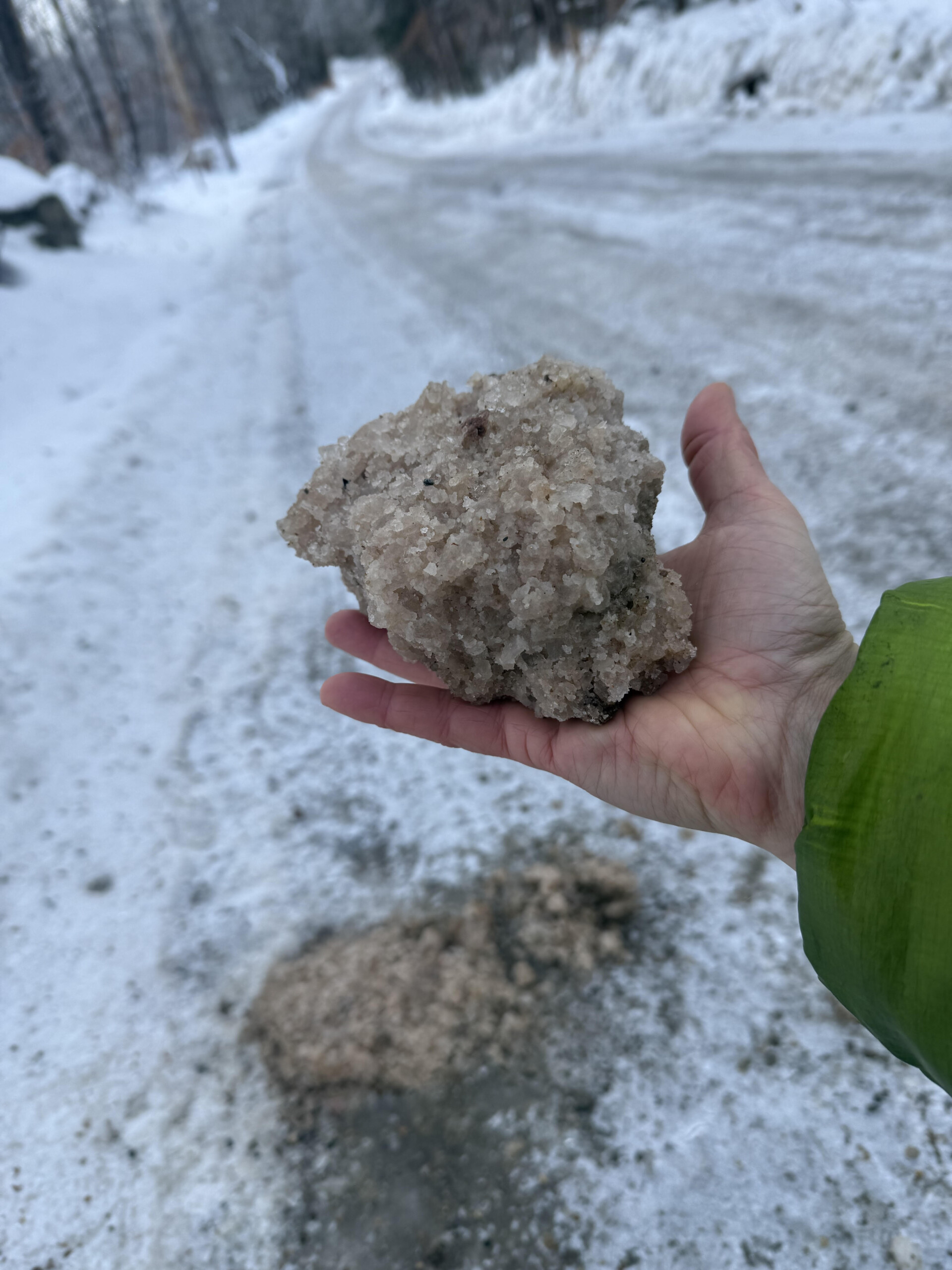
The week also addressed common misconceptions about winter safety. Experts explained that hearing salt crunch underfoot does not indicate safer conditions; instead, the sound often means too much salt has been applied.
“Thank you to everyone who participated in Winter Salt Awareness Week by attending livestreamed webinars, sharing information within their communities, and joining the Road Salt Round Table discussion,” said Aubrey Voelker, coordinator of the Salt Reduction Program and Green SnowPro with the NHDES Watershed Assistance Section. “One of the biggest hurdles to reducing winter salt use is increasing public awareness about the costly impacts salt has on our environment and infrastructure. Events like Winter Salt Awareness Week help build that awareness and allow us to work together to develop solutions and advocate for the protection of our natural resources.”
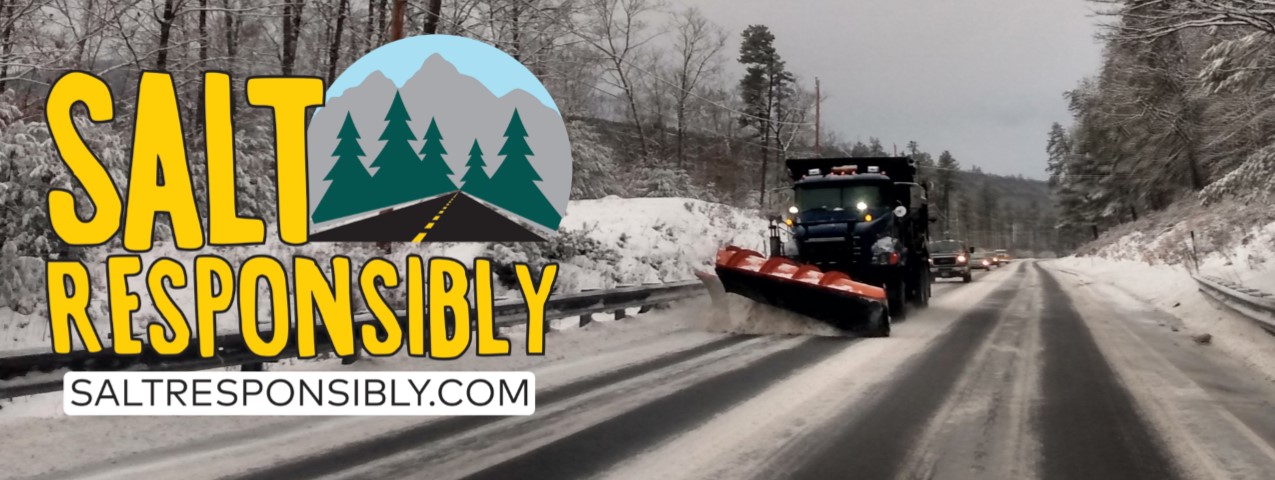
GMCG also promoted its ongoing Salt Responsibly campaign, launched in January 2022, which provides education and guidance for residents, municipalities, and contractors on reducing salt use while maintaining safety. As part of the campaign, new public service announcements are airing on radio stations across New Hampshire this winter.
More information about GMCG’s research and education efforts is available at saltresponsibly.com